
What if retirement does not have to look like everyone else's retirement? Many people assume they will work full-time through their working years, then leave the workforce completely at some point. But what if that path does not match what you actually want from life?
You might want time off now while you have the health and energy to travel. Or you might prefer to keep working into later years because your job gives your life meaning. Maybe you would like to reduce hours instead of quitting altogether. Or perhaps you could leave work entirely if your savings are large enough.
The point is, you may have more options than you realize. Let us explore four paths that could work for your life.

Why There Is A "Traditional" Retirement Age (And Why It Does Not Have To Be Yours)
It might surprise you to learn that retirement as we know it is relatively new. In the late 1800s, most people worked until they physically could not anymore. Employers began offering pensions to support older workers, and by the early 1900s, a standard retirement age became established in some pension systems. When Social Security was created in 1935, its planners selected age 65 after considering prevailing retirement ages in state and private pension systems as well as actuarial considerations.
Over the next few decades, industries and marketers actively shaped the idea of retirement as a goal. Retirement communities, investment firms, and financial planning talk transformed retirement from convalescence into a promised "golden years" lifestyle to be enjoyed and planned for.
The traditional retirement timeline developed from a combination of pension practices, government programs, labor-market norms, and demographic considerations. It was never intended to be a universal prescription for when every person should stop working. You can be productive well into your later working years if you want to be. Or you might want something completely different.
Why Some People Are Rethinking Traditional Retirement
Modern life creates both opportunities and challenges that our parents did not face:
You may live longer. Your retirement could last 30+ years, which means you need more financial cushion and a clearer plan about what you will actually do with all that time.
Your job might offer meaning. Many professional roles provide purpose, social connection, and intellectual engagement. Some people would rather work part-time than lose that entirely.
Time-sensitive experiences matter. Hiking, travel, caregiving: these become harder as you age. Some people would rather take extended time off during their working years, while they have the health and energy to fully enjoy it.
You might be able to retire early. If you accumulate enough savings, including through high income, disciplined saving, or a financial windfall (like a company stock sale), you could leave work earlier than traditional retirement age.
Pensions have become far less common. Your parents may have had a company pension that paid them for life. Traditional defined benefit pensions are much less common among private-sector workers than they were in previous generations. This means you are likely responsible for managing your own retirement savings, which creates both more flexibility and more risk.
So what do your actual options look like?
Path 1: Financial Independence: Retire Whenever You Choose
The idea: If you have saved enough, you may not need to work anymore. At all.
This path is for people who have accumulated substantial assets, including through high income, disciplined saving, or a financial windfall. If your portfolio is sufficient to support your projected spending under a range of reasonable assumptions, you may have the flexibility to leave work, reduce your hours, or continue working by choice.
Why it appeals to people:
- Greater control over your schedule
- No boss, commute, or workplace stress
- Time for hobbies, travel, or relationships while you are still physically able
- You can test what retirement actually feels like before fully committing
The trade-offs and challenges:
- You lose employer health insurance coverage and must buy your own (often a big expense until Medicare at 65)
- Your portfolio must last potentially 40+ years without income, which requires careful planning
- You may miss the social connection, purpose, and routine that work provides
- Early retirement can trigger lower taxes in some years, which creates opportunities. However, it also requires thoughtful planning
Example: Sarah has $2.5 million in savings and modest annual expenses of $50,000. Her advisor models whether that portfolio could support her projected spending over a potentially long retirement under a range of market, inflation, tax, and longevity assumptions. If the plan remains sustainable across reasonable scenarios, she may have the flexibility to leave work at 50 without additional income. During her early retirement years, when her income is very low, she might convert some traditional retirement assets to Roth accounts, potentially paying income tax at relatively favorable rates today in exchange for future qualified Roth withdrawals that generally are not included in taxable income. She would also purchase an ACA health plan and may qualify for subsidies based on her lower income.
Path 2: Sabbaticals: Take Extended Time Off Now, Return to Work Later
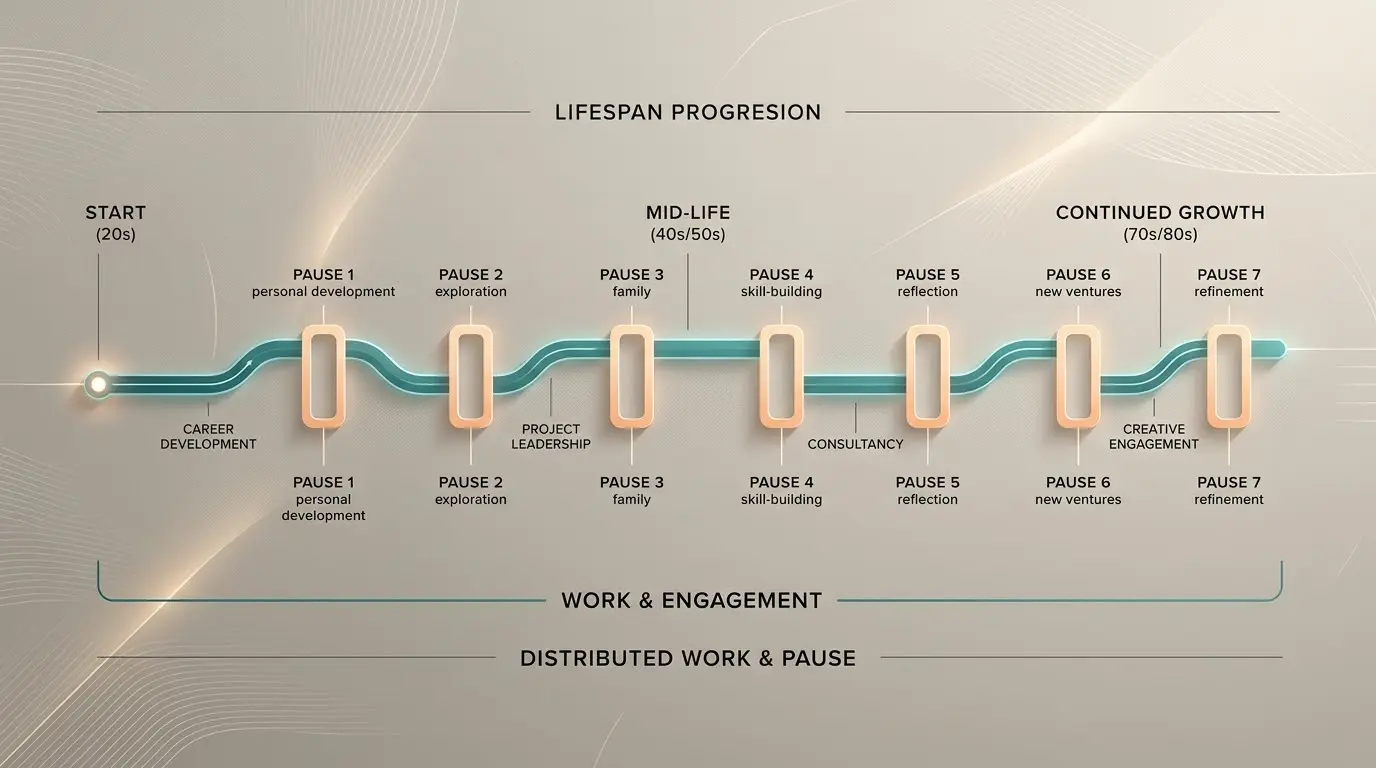
The idea: Instead of saving all your non-working years for the end of life, take extended breaks during your career when you are young and healthy enough to enjoy them.
A sabbatical might last a few months or several years. You could travel, care for a family member, pursue education, or simply rest. Then you return to work.
Why it appeals to people:
- You experience retirement benefits (free time, adventure, flexibility) while you still have energy and health
- You need to plan ahead and save enough to cover your living expenses during the sabbatical period
- It breaks up a long career and can prevent burnout
- You still have time to save for a traditional retirement later
The trade-offs and challenges:
- You step out of the workforce, which could affect your salary when you return, your career progression, or your ability to find a similar job
- With no earned income during the sabbatical, your ability to make new retirement contributions may be limited. You lose not just the contributions you would have made, but also the compound growth those contributions would have earned over the remaining years until retirement. This may require you to work longer or save more aggressively when you return
- Finding health insurance during the break can be complicated and expensive
- Your employer may not hold your job for you. Many do not offer formal sabbatical programs
Example: James takes a one-year sabbatical at 45 to travel and care for his aging parent. He saves aggressively for two years beforehand to cover his expenses during the year off. When he returns, he finds a similar role at a different company, though at a slightly lower salary. Because he took time off, his total retirement savings may be affected, so he and his advisor model whether working until 68 instead of 65 is necessary to stay on track.
Path 3: Coast FIRE: Work a Less Demanding Job and Let Your Savings Grow
The idea: Your retirement savings may have grown enough that, under reasonable assumptions about investment returns, inflation, spending, and retirement timing, you may no longer need to make additional retirement contributions to reach your target. So you switch to a job you enjoy more, even if it pays less, and cover your living expenses. The money you have already saved does the heavy lifting.
Coast FIRE stands for "Coast Financial Independence, Retire Early," but it is less extreme than the name suggests. You are still working; you are just working for income to live on, not to build retirement savings.
Why it appeals to people:
- You get to pursue more meaningful, less stressful work without sacrificing retirement security
- You keep the social, psychological, and financial benefits of employment
- You retain employer health insurance
- You do not need to have as much savings as full financial independence requires
The trade-offs and challenges:
- You need your advisor to verify that your current savings will actually grow into enough to retire on (which depends on investment returns, inflation, and your future expenses)
- If markets underperform or inflation rises, your plan could be at risk
- You are relying on continued employment for health insurance and living expenses, so job loss becomes a bigger concern
Example: Marcus has built up $1.5 million in retirement savings by age 55. His advisor runs the numbers and determines that if this money grows at a reasonable rate, it will support his retirement at 68. So instead of staying in his demanding consulting role (which pays $150,000), he takes a job managing community programs for a non-profit (paying $100,000). The non-profit salary covers his living expenses, and his $1.5 million grows untouched. If unforeseen circumstances happen, inflation spikes, or any other negative event affects his plan, he can always go back to consulting to bolster his savings. If the assumptions continue to hold, this approach could allow him to pursue work he enjoys with potentially less pressure to maximize income.
Path 4: Semi-Retirement: Work Part-Time and Test the Waters
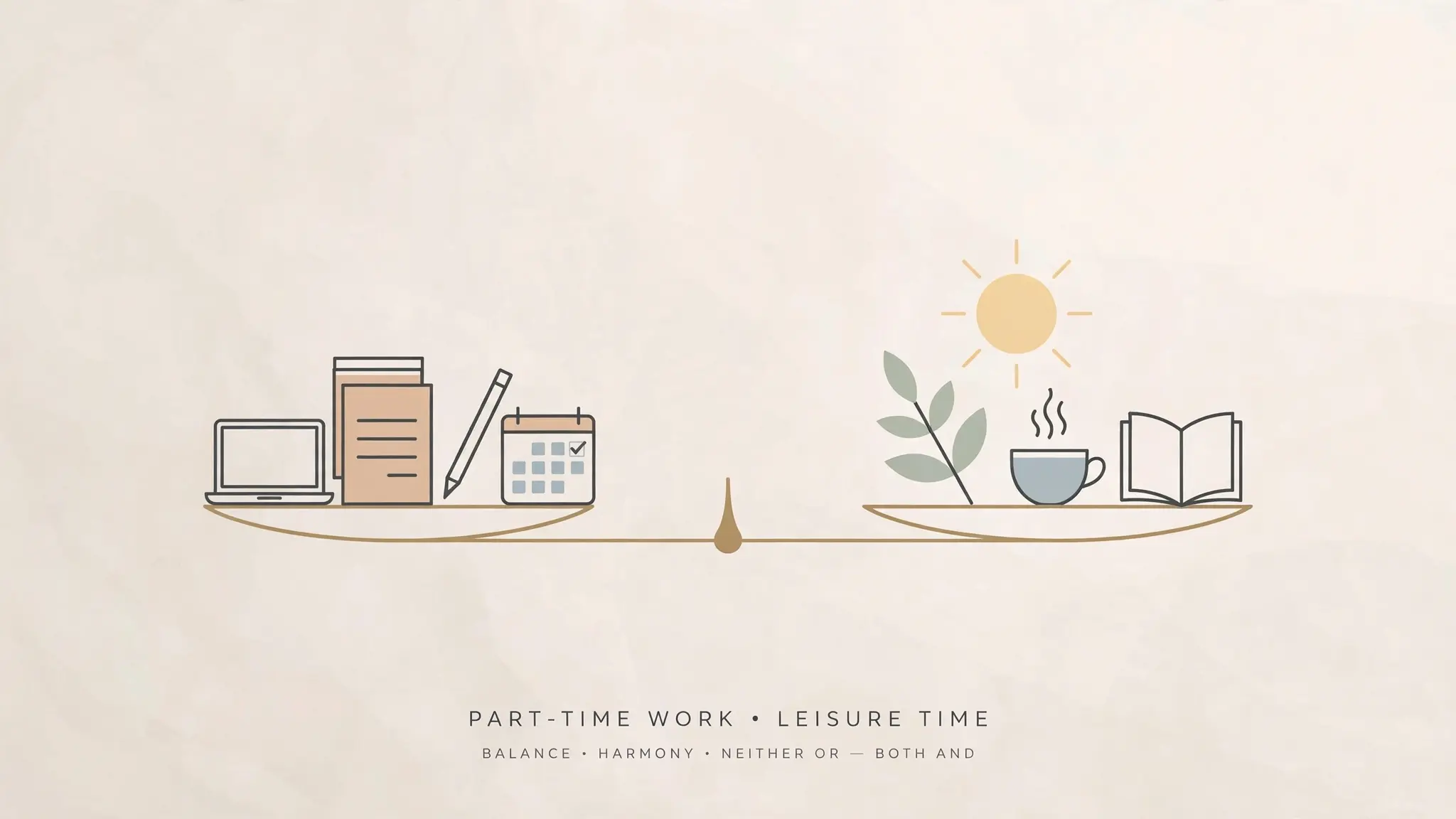
The idea: Instead of a cliff where you work full-time one day and not at all the next, gradually reduce your hours. Work 20 hours a week instead of 40. Keep some income, keep some structure, and enjoy more freedom at the same time.
Why it appeals to people:
- You get to "test" retirement before fully committing to it
- You maintain income, which reduces how much your portfolio must support
- You keep social connection, professional identity, and routine
- You may be able to delay claiming Social Security, which can increase your monthly benefit
- Continuing to earn income can reduce the amount you need to withdraw from your portfolio, which may reduce exposure to sequence-of-returns risk (the danger that market downturns early in retirement drain your portfolio)
The trade-offs and challenges:
- You need enough savings that part-time income plus your portfolio can support your lifestyle
- Employer-provided health insurance may no longer cover you if you drop below full-time status
- Your earning power may decline due to reduced hours or limited availability
- Some employers do not support part-time arrangements or reduced schedules
Example: Lisa works as a therapist full-time at 62. She could retire at 65, but instead, she negotiates to see clients 2 or 3 days a week. She earns $50,000 annually (down from $90,000), which covers her living expenses. Her $1.5 million portfolio is left alone to grow. She has built-in structure, relationships, and income. Delaying Social Security beyond full retirement age can substantially increase her monthly benefit, with increases continuing until age 70. Her advisor models whether this plan is sustainable if she works part-time until 70, or if she may need to stop earlier due to health issues.
The Real Challenge: Which Path Is Right For You?
None of these paths work for everyone. The one that fits depends on:
How much you have saved
What your annual expenses are
How much you rely on work for purpose, relationships, or identity
Your health, longevity considerations, and family circumstances
Whether you can access affordable health insurance
Your Social Security strategy
How flexible you are if markets or life circumstances change
This is where working with a financial advisor may become valuable.
How An Advisor Helps You Navigate These Paths
An advisor providing comprehensive financial planning services may help you think through whether an alternative retirement path is actually feasible for you, and if so, how to structure it so you do not run out of money or face unexpected tax bills.
Specifically, an advisor may:
Run the numbers. They may model whether your savings will last 40 years, whether taxes will be manageable, and whether your plan survives a market downturn.
Stress-test your assumptions. What if markets return less than expected? What if inflation rises? What if you need health care earlier than planned? An advisor may run scenarios so you are not surprised.
Identify tax planning opportunities. Early retirement or sabbatical years often mean lower income, which creates opportunities to convert retirement accounts or harvest capital gains at favorable tax rates.
Help with health insurance. This is often the biggest barrier to early retirement. An advisor may help incorporate health insurance costs and potential Marketplace subsidies into a financial plan, while you can work with a qualified insurance professional or the Marketplace to evaluate specific coverage options.
Time Social Security strategically. When you claim affects not just how much you get, but also how long your portfolio needs to last. An advisor may show you the math.
Adapt your plan if circumstances change. If a path stops working (markets tank, you lose income, your health changes), an advisor may help you pivot to a sustainable alternative.
The Underlying Truth: Retirement Is A Choice
The traditional retirement timeline of working full-time and then retiring completely at a set age is not a law. It is a choice that worked for an earlier generation, but it may not be your choice.
You may have already saved enough to leave work earlier than expected. You may want to work into your later years because it gives your life meaning. You may want to take time off now, work part-time later, or some combination. The point is, you have options some people might not know about.
If you have spent years building wealth and thinking about retirement, it is worth exploring what actually makes sense for your life, not just following a template that was designed for someone else.
If this resonates with you, consider a conversation with a financial advisor. Together, you can explore how your financial resources, income, taxes, health insurance, and goals might fit together.